
Stone-safe care for Apopka lanais and pool decks
Travertine Sealing in Apopka, FL
Get a free travertine sealing estimate in Apopka, or call (689) 529-7659.
- Brings out deeper paver color
- Fresh joint sand helps lock pavers in place
- Gives weeds less room to grow
- Makes the surface easier to keep clean
- Free estimate, no obligation
Request a Free Estimate
Free, no obligation.
Can I get my travertine sealed in Apopka, and how soon will someone reply?
A local contractor seals travertine patios, lanais and pool decks across Apopka, FL, and a reply reaches you inside 1 business day, often within a few hours. The estimate costs nothing and carries no pressure to book. Share your street or ZIP code and which stone floor needs help, and the call back comes with a plan and a number. To talk now, call (689) 529-7659.
Travertine is a natural limestone with small pits and holes across its face, so water, oil and dirt sink in faster than they do on a smooth paver. A stone-safe wash and the right sealer give the floor a way to shed water instead of drinking it. When you are ready, ask for a free Apopka estimate, and mention whether the stone sits inside a screen cage or out in the open.
Which towns near Apopka can book travertine sealing?
Travertine work is booked across the towns around Apopka, from Wekiwa Springs and Forest City out to Leesburg. Each town below has a page of its own with local notes. Do not see your street here? A call to (689) 529-7659 settles it.
What makes travertine different from the pavers next to it?
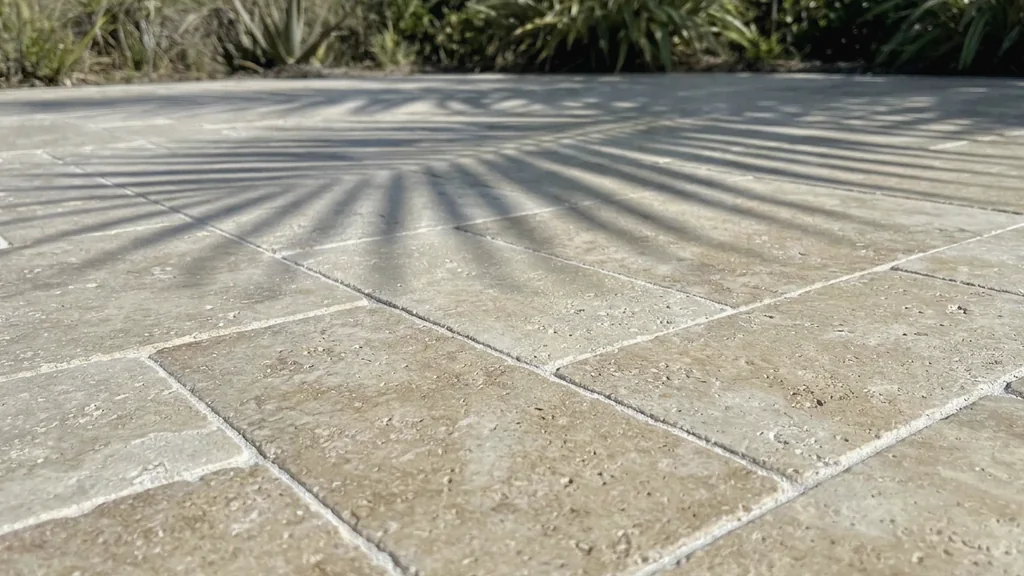
Wikipedia describes travertine as freshwater limestone laid down around mineral springs, with a surface marked by natural pits and troughs. That open texture is part of the look, and it is also why liquid finds a way in. To see how your stone is holding up, ask for a free Apopka estimate.
Pits and holes soak up water
Wikipedia puts the porosity of fresh travertine at roughly 10 to 70 percent, a wide range that shows how open the stone can be. On a lanai, that means a spilled drink or a wet towel is more likely to sink in than sit at the surface. Call (689) 529-7659 if yours has already darkened in spots.
Why a film coat is the wrong tool
Kennelly Paver Sealing warns that a film-forming topical product on natural stone can cause slipperiness, peeling and other costly failures. Castle Clean and Seal says limestone needs a penetrating sealer and not a surface film. Ask the contractor to name the product, and send the short form.
Stone and brick need different products
Kennelly says brick pavers take water-based sealers, while natural stone takes an impregnating one. If a patio mixes travertine edging with brick or concrete pavers, expect two products on one job. Say what is on your patio when you request a free price.
Which sealer goes on travertine in Central Florida?
Kennelly describes the right product as an impregnating sealer, a transparent barrier that does not form a film and that repels water and oil. Castle agrees that penetrating products suit limestone. Castle also says a professional hands over the product data sheet on request, so ask for it. To do that, call (689) 529-7659.
Castle calls water-based sealer the professional standard in Florida, because it lets moisture escape and prevents white hazing, while solvent products can turn white and peel in humid air. Central Florida humidity runs above 80 percent, Castle adds. Ask which family your stone sealer belongs to when you ask for a written number.
Will sealed travertine stay grippy around an Apopka pool?
Castle recommends a non-slip additive for travertine pool areas and says it adds only a small amount to the cost. Bare wet feet are the reason. A penetrating product leaves no shiny film at the surface, which is the part Kennelly ties to slick floors. Ask about footing when you call (689) 529-7659.
Chlorinated water, constant moisture and sun make a pool deck a hard place for stone, according to Castle. A screen cage keeps out leaves and bugs, but the deck still gets splash water from swimmers. Tell the contractor whether yours sits under a cage when you ask for a free Apopka estimate.
What does a travertine sealing visit include?
A visit has four parts, and the wash and drying time take the longest. The contractor keeps a stone-safe approach at each one. To hear how those parts apply to your floor, call (689) 529-7659.
Walk-through and test spot
The contractor notes pits, loose tiles, old coatings and stains, then tries a small hidden area before the whole floor.
Stone-safe wash
Algae and dirt come off with products and pressure suited to limestone, so the face of the stone is not scarred.
Joint refill
Gaps between the stones are refilled once the floor has dried, so the edges lock together again.
Penetrating seal
The sealer soaks in and leaves no film, and the contractor walks the floor with you afterward.
How can I tell my travertine needs sealing?
Watch for dark patches where water lingers, a green film in shaded corners, orange streaks near sprinkler heads and gritty joints that keep losing material. Each sign points to a slightly different fix, so photograph them before the visit. To compare notes with a contractor, start a free estimate.
Dark, damp looking spots
Water that sinks in and does not dry evenly suggests the stone is taking on moisture.
Green film in the shade
Kennelly says humidity feeds algae, and a stone floor under oaks or a roof edge stays damp longer.
Orange streaks
Iron in sprinkler water can leave rust deposits, which UF/IFAS says is common with Florida well water.
Loose or low joints
Rain pulls sand and grout material from the gaps, which lets edges rock and collect water.
How do Apopka rain, sprinklers and pool water treat stone?
Stone outdoors here faces three kinds of water, and each leaves its own mark. Looking at them one at a time helps you decide what the floor needs. To describe your own yard to a contractor, call (689) 529-7659.
Summer rain
Wikipedia lists 50.32 inches of rain a year in Apopka, about 115 rainy days and 8.36 inches in August alone. A stone floor on an open patio stays wet for long stretches, and a damp floor grows algae sooner. Tell the contractor how much roof or tree cover the stone gets when you ask for a free Apopka estimate.
Sprinkler water
The city of Apopka says it wants irrigation to run on reclaimed water, and its two storage ponds hold 349 million gallons. Homes on private wells are a different case, since UF/IFAS says most Florida well water is high in iron and leaves rust deposits on whatever it touches. Light stone shows an orange streak easily, so point out any near the sprinkler heads when you call (689) 529-7659.
Newer homes, unknown history
Apopka grew from 41,542 people in 2010 to 54,873 in 2020, and the Census counted 19,425 housing units. A lanai floor laid in that stretch may have been sealed once at install or not at all. Tell the contractor what you know when you send the short form.
How much does travertine sealing cost in Apopka?
Kennelly Paver Sealing lists natural stone sealing at $2.00 to $3.50 per square foot in Orlando, with typical projects between $1,000 and $3,500, and says it costs more than standard brick sealing. Castle Clean and Seal gives $1.75 to $3.00 per square foot for pool decks and sets a $1,000 minimum, but it does not post a stone only rate, so the table below uses the Kennelly figure. For a number on your own floor, ask for a free Apopka estimate.
Square footage drives the price first, and condition moves it again. A 300 square foot lanai can land under the minimum charge, which means a small job may cost more per foot than the table shows. Heavy staining raises cleaning labor, Kennelly says. Holding a quote already? Call (689) 529-7659 and compare it with these ranges.
Pavers next to the stone? The pages on paver sealing, pool deck paver sealing and paver restoration cover them, and the town list shows where the work is offered. To price both at once, request a free price.
| Stone area | Typical example | Natural stone sealing |
|---|---|---|
| 300 sq ft | Lanai floor or entry | $600 to $1,050 |
| 600 sq ft | Lanai plus walkway | $1,200 to $2,100 |
| 1,000 sq ft | Stone pool deck | $2,000 to $3,500 |
Math based on the $2.00 to $3.50 per square foot for natural stone that Kennelly Paver Sealing published for Orlando. Castle Clean and Seal sets a $1,000 minimum. Your contractor sets the actual price after seeing the stone. Repairs and stripping an old film coat are usually extra.
What is the travertine sealing process, step by step?
Most stone jobs follow five steps, from the first test spot to the final walk-through. Paver Savers of Central Florida says its jobs run one or two days, weather permitting. To get on the schedule, call (689) 529-7659.
1. Walk and test
The contractor measures the floor, notes damage and tries a small hidden spot before anything else.
2. Stone-safe wash
Algae and grime are treated and washed off with gentle pressure suited to limestone.
3. Dry time
Sealer needs a dry surface, so humid or rainy days push the next step back.
4. Refill the joints
Joint material goes in once the stone is dry and the extra is cleared off the face.
5. Penetrating seal
The product soaks in, the contractor checks the floor and then walks it with you.
After the coat, Kennelly says a water-based product is walkable in three to four hours and fully cured in 24 to 48 hours, and that foot traffic, pets and sprinklers should stay off while it cures. In Apopka, that means switching the sprinkler timer off for a day or two. To ask how long your floor would stay closed, ask for a written number.
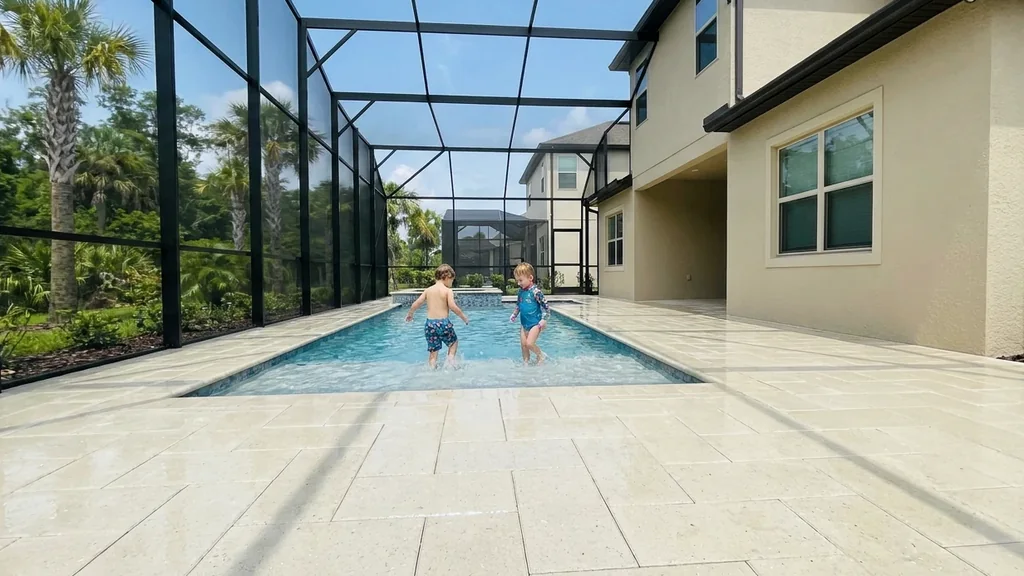
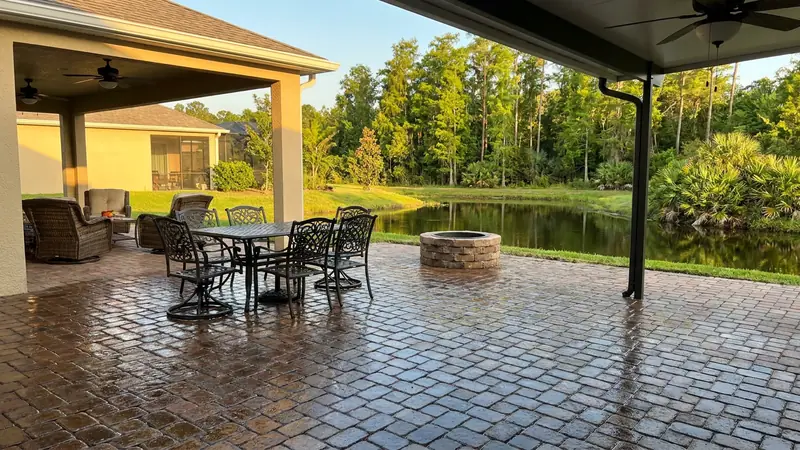
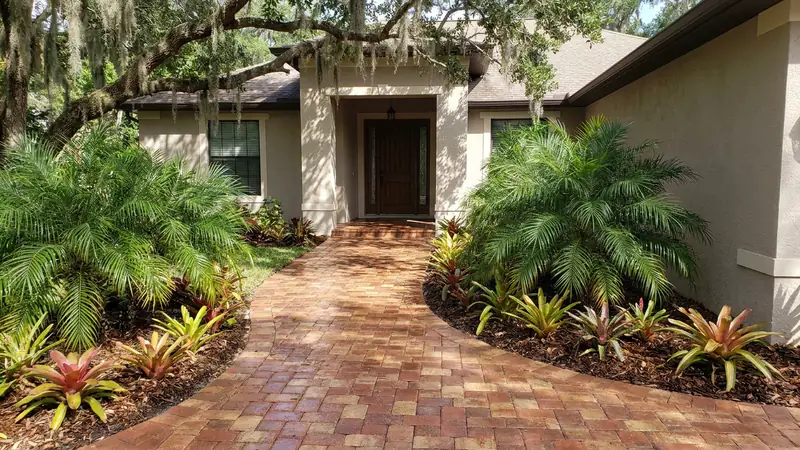
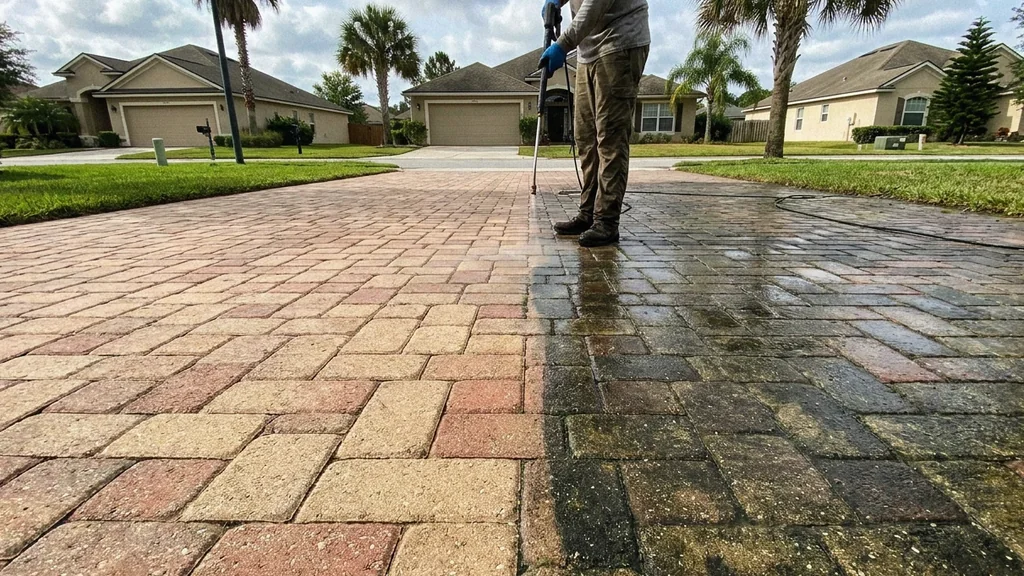
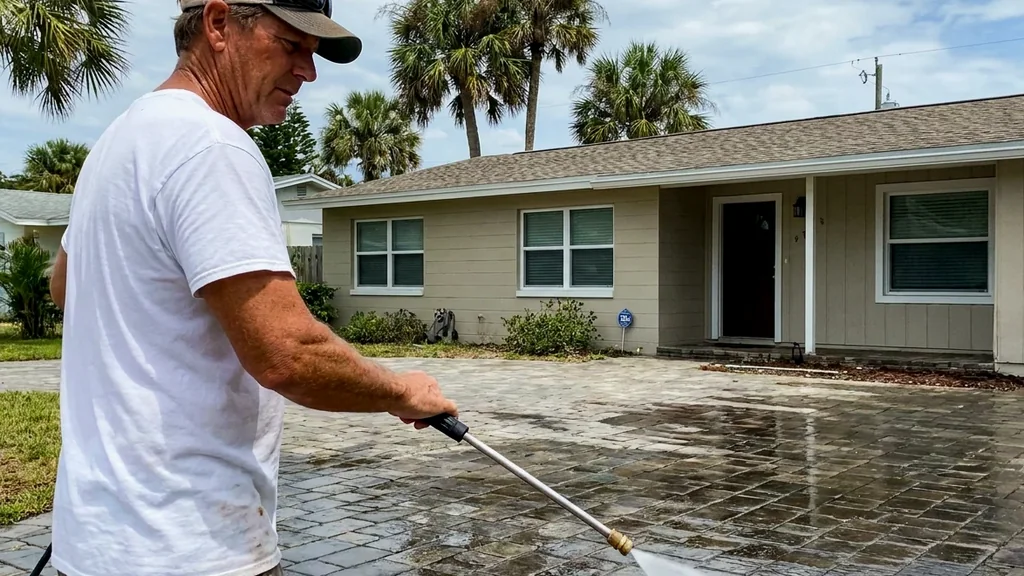
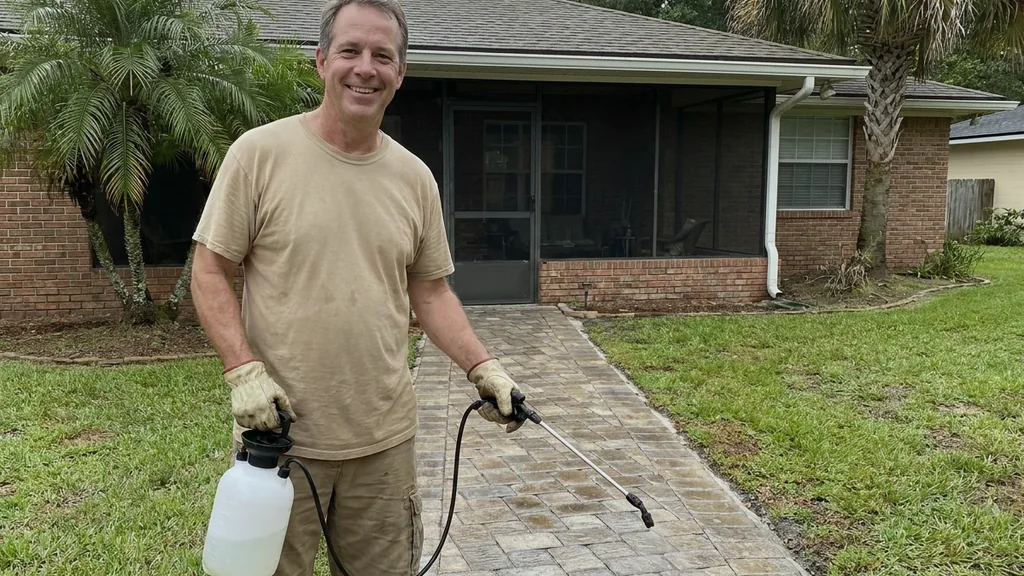
What does sealed travertine look like around Apopka?
How often does travertine need to be resealed?
No page read for this site gives a travertine only schedule, so start from the general range. Kennelly says a sealer coat lasts two to four years in Orlando and suggests a cleaning every 12 to 15 months to help it last. Shaded, damp stone and busy pool decks often wear sooner than a dry, quiet entry. To plan a schedule for your floor, call (689) 529-7659.
A cheap product shortens everything. Castle says no-name sealers break down in 6 to 12 months under Florida sun, and that is a reason to ask about the brand before the price. Ask for the data sheet when you ask for a free Apopka estimate.
Can the stone and the pavers beside it be done on one visit?
Often yes, since one crew can wash and seal both in the same trip, as long as each surface gets its own product. Kennelly says brick takes water-based sealers and stone takes an impregnating one, so the contractor mixes and applies each separately. Ask whether both are in one price when you send the short form.
Joint material needs a plan too. Gaps between travertine and between pavers are refilled after the wash dries, and a loose or sunken piece is better fixed before any coat goes down. Describe what your patio looks like when you call (689) 529-7659.
What do Apopka homeowners ask before sealing travertine?
Cost, grip, timing and sealer type come up most. Short answers are below, and for anything else you can ring (689) 529-7659.
How long does paver sealing last in Florida?
Kennelly Paver Sealing in Orlando says a coat lasts two to four years and suggests a cleaning every 12 to 15 months. No page read for this site gives a travertine only figure, so ask the contractor how long the stone product you pick is expected to hold.
Is it necessary to seal pavers in Florida?
Sealing is a choice, not a rule. For travertine the case is stronger, since Wikipedia describes the stone as pitted and porous, which lets water and dirt soak in. An impregnating sealer is meant to slow that.
How much does it cost to seal travertine pavers?
Kennelly lists natural stone sealing at $2.00 to $3.50 per square foot in Orlando, with typical projects from $1,000 to $3,500. Castle Clean and Seal sets a $1,000 minimum, so a small lanai may price above the per-foot math.
What happens if pavers are not sealed?
Wikipedia describes travertine as pitted and porous, so water and dirt move into the stone. Kennelly says humidity feeds algae, and UF/IFAS says Florida well water is often high in iron, which leaves rust deposits on what it touches. An impregnating sealer is meant to slow all of that without leaving a film on top.
Can the travertine around my screened pool in Apopka be sealed?
Yes. Castle says travertine pool areas do well with a non-slip additive in the sealer, at a small added cost. Tell the contractor whether the deck sits under a screen cage and how often it is used.
Is sealed travertine slippery when wet?
It depends on the product. Kennelly warns that a film-forming topical coat on natural stone can leave it slippery and peeling, while an impregnating sealer leaves no film at the surface. Ask about grip before the work is booked.
Does travertine need a different sealer than brick pavers?
Yes. Kennelly says brick pavers take water-based sealers and natural stone takes an impregnating sealer, and Castle says limestone needs a penetrating product instead of a surface film. A mixed patio can need two products.
Why does my travertine have orange streaks or a green film?
Orange streaks often come from iron in irrigation water, since UF/IFAS says most Florida well water is high in iron. A green film is usually algae, which Kennelly says humidity feeds. Show the contractor where each one sits.
How long before I can walk on travertine after sealing?
Kennelly says a water-based coat is walkable in three to four hours and fully cured in 24 to 48 hours, with foot traffic, pets and sprinklers kept off during the cure. A humid or rainy day can stretch it.
How soon can someone look at my travertine in Apopka?
A local contractor replies within 1 business day, often within hours. The visit itself is short, and the job usually takes one or two days, weather permitting, according to Paver Savers of Central Florida.
What other paver work can a contractor handle in Apopka?
Ready to protect your Apopka stone?
Share your street and the floor you want looked at, and a local contractor writes back inside 1 business day, often within hours.
Free, no obligation